

In recent years, Kenya has made commendable progress in reducing air pollution through the adoption of cleaner fuel standards. However, the recent government proposal to relax sulphur limits in imported fuel threatens to undo these hard-won gains and expose millions of Kenyans to increased health and environmental risks.
This is not simply a technical adjustment. It is a public health, environmental justice, and policy accountability issue that could shape the future quality of the air communities breathe across the country.
Understanding the policy shift
Kenya, under harmonized East African Community (EAC) standards and national regulations by the Kenya Bureau of Standards (KEBS), had moved toward ultra-low sulphur fuels with targets as low as 10 parts per million (ppm) in diesel — aligning with global best practices.
However, the government has recently temporarily revised sulphur limits upward to 50 ppm for both petrol and diesel, citing supply constraints.
This represents a five-fold increase in allowable sulphur content, effectively rolling back progress toward cleaner fuels.
Clean fuel is not a luxury. It is a public health necessity and a critical part of environmental justice.
Why sulphur content matters
Sulphur in fuel is not just a chemical parameter. It directly affects public health, ecosystems, and economic well-being.
1. Air quality and public health
Higher sulphur fuels produce sulphur dioxide (SO₂) and particulate matter during combustion. These pollutants are linked to:
- Respiratory diseases such as asthma and bronchitis
- Cardiovascular complications
- Increased hospitalizations and premature deaths
Cleaner fuels at 10 ppm significantly reduce these emissions, which is why global standards continue shifting toward ultra-low sulphur fuels.
2. Environmental protection
Increased sulphur emissions contribute to:
- Acid rain
- Soil and water degradation
- Damage to ecosystems such as Mt. Kenya and the Aberdares
This undermines Kenya’s commitments under climate and environmental frameworks, including Nationally Determined Contributions (NDCs).
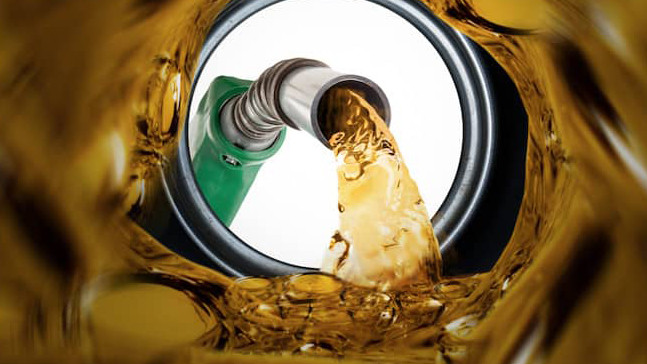 Air quality policies directly affect the health of communities,
ecosystems, and future generations.
Air quality policies directly affect the health of communities,
ecosystems, and future generations.
3. Vehicle efficiency and economic costs
Higher sulphur fuels:
- Damage engine components
- Reduce fuel efficiency
- Increase maintenance costs for wananchi
Experts have consistently noted that sulphur combustion forms corrosive acids that degrade engine systems over time.
Contradicting regional and global commitments
The East African Community (EAC) has progressively tightened fuel standards from 500 ppm to 50 ppm, with ongoing discussions toward 10 ppm levels.
Kenya has been a regional leader in adopting cleaner fuels and aligning with Euro IV and Euro VI emission standards.
Reversing these gains:
- Weakens regional harmonization
- Undermines investor confidence in clean energy transitions
- Signals policy inconsistency
The bigger question: who bears the cost?
While the justification for the policy shift is fuel supply stabilization, the real cost is transferred to:
- Communities already exposed to pollution
- Urban populations in cities like Nairobi
- Vulnerable groups including children, the elderly, and low-income households
This raises serious concerns about environmental justice and equity.
A dangerous precedent
Temporary policy measures often risk becoming permanent.
If not challenged:
- Kenya could normalize lower fuel standards
- Investments in cleaner technologies may stall
- Public health burdens will continue increasing
Our call to action
At Mt. Kenya Network Forum (MKNF), we call on government, regional institutions, civil society, and development partners to protect the progress already made toward cleaner fuels and safer air.
- Reaffirm commitment to 10 ppm ultra-low sulphur fuel standards
- Ensure temporary measures remain strictly time-bound and transparently reviewed
- Strengthen enforcement through KEBS and EPRA
- Accelerate regional transition toward cleaner fuel standards
- Support stronger air quality monitoring and environmental accountability
Clean air is not negotiable
Kenya stands at a crossroads.
We can either protect the progress made in air quality and public health, or roll back years of environmental gains in the name of short-term convenience.
The decision made today will determine the air communities breathe tomorrow.