Four years ago, we planted a simple idea. What if a tree could become more than a tree? What if it could provide shade for a child sitting under the afternoon sun, fruit for a family, and an income-generating asset for a struggling household? Four years later, the answer is visible in the growing green spaces of schools and communities across Laikipia East, Kieni and Juja.
This is the story of the Community Fruit Tree Nursery, School Afforestation and Climate Resilience Initiative — a journey that has shown us that when communities are given the opportunity, knowledge and support to care for nature, nature can give back in remarkable ways.
It started with a seedling
The project began with a vision of connecting environmental restoration with the everyday realities of vulnerable communities. Rather than treating tree planting as a one-day activity, Mt. Kenya Network Forum set out to build a culture around trees — one that connects environment, education, nutrition, climate resilience and livelihoods.
Fruit trees were particularly important because they offer multiple benefits over time: food, nutrition, shade, ecological restoration and the potential for household income. The vision was simple. Plant a tree. Nurture a child. Strengthen a community. Restore nature.
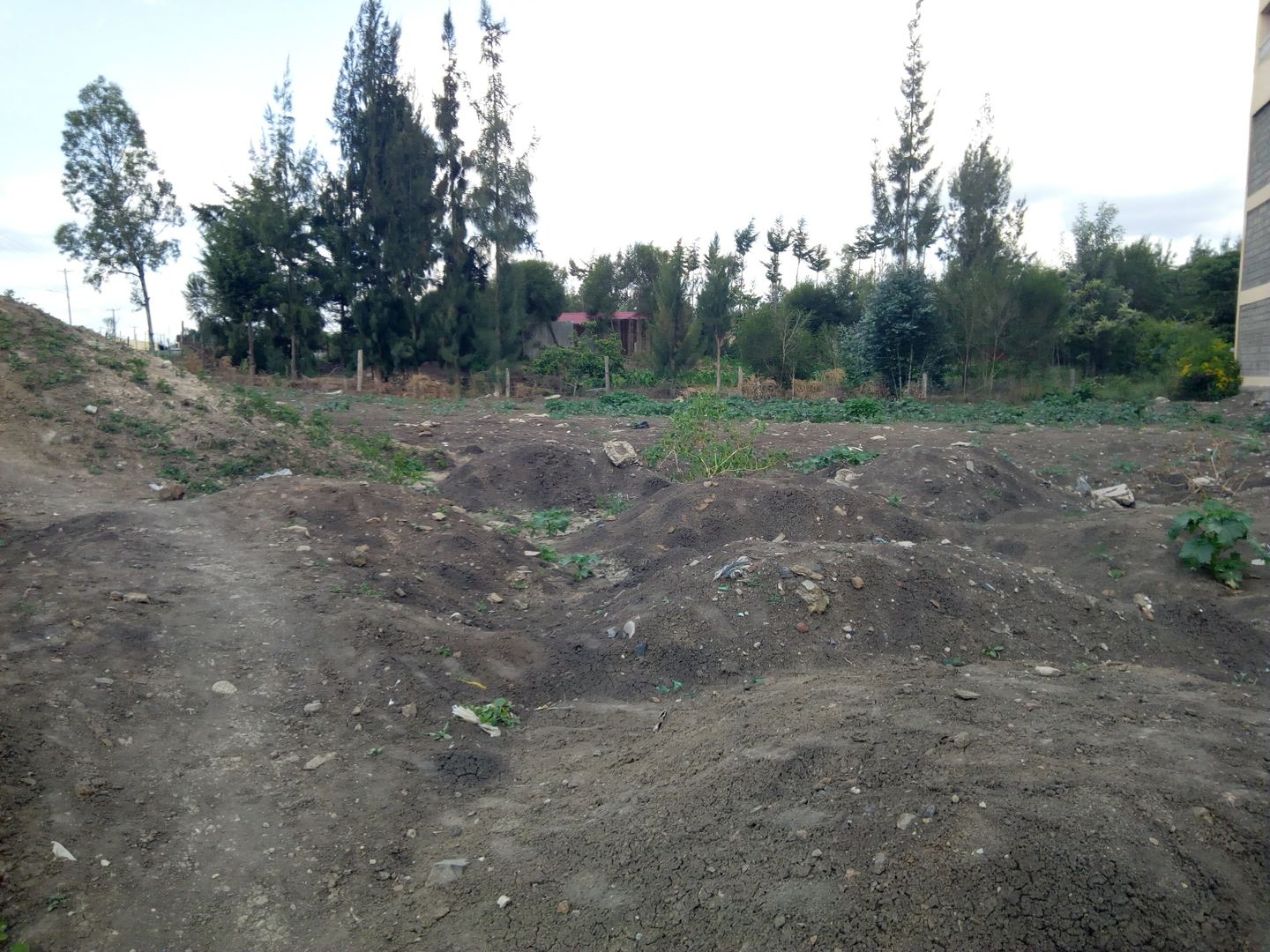 Where it begins: ground opened and planting stations prepared
before a single seedling goes into the soil.
Where it begins: ground opened and planting stations prepared
before a single seedling goes into the soil.
More than trees: transforming school compounds
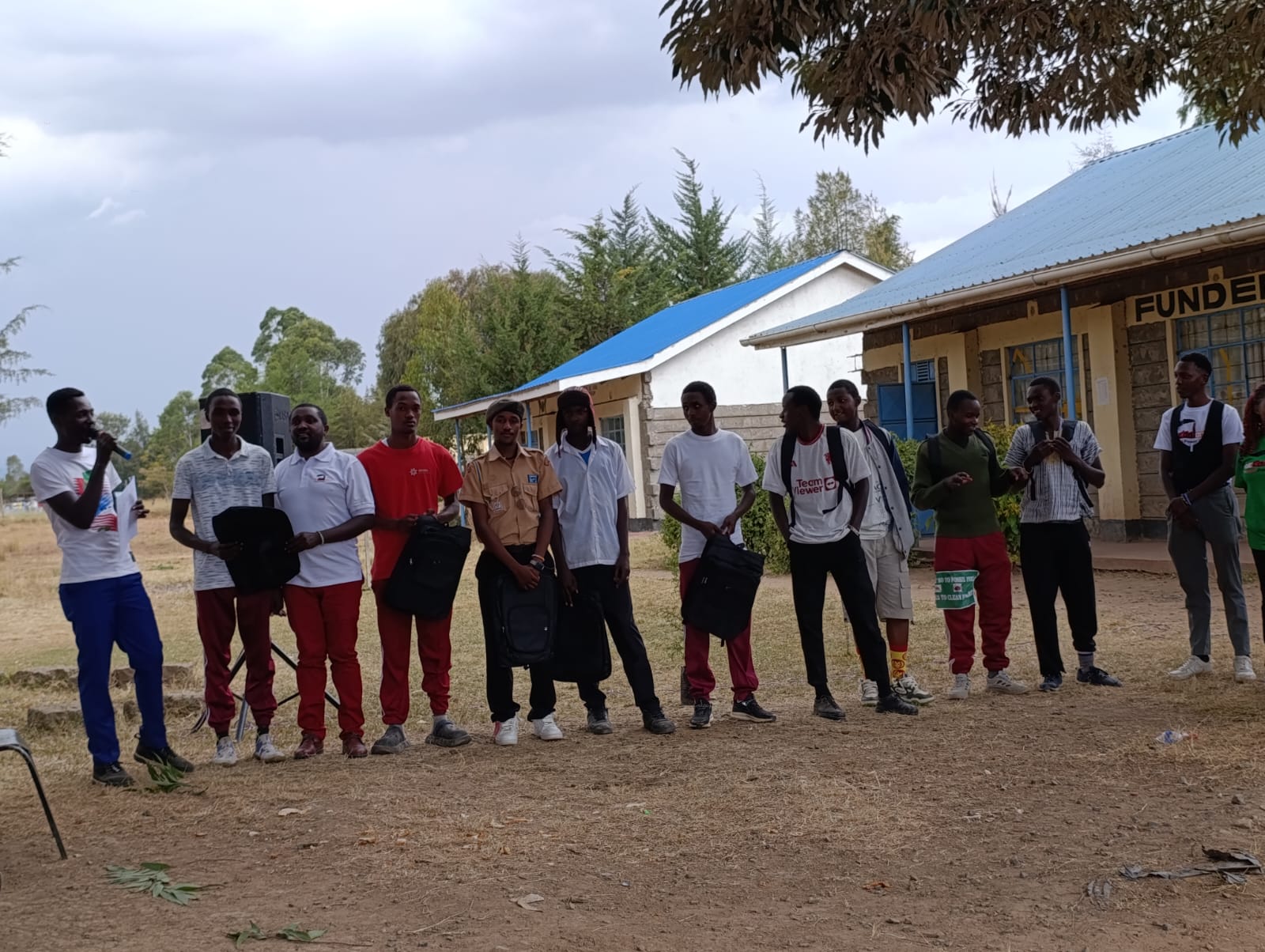
One of the most visible successes of the past four years has been the transformation of learning environments. The programme has supported and transformed more than five schools in Laikipia East Constituency, two schools in Kieni Constituency in Nyeri County, and schools in Juja Constituency, Kiambu County.
Where there were once open spaces exposed to the heat, growing trees are now creating greener and more welcoming school environments. For pupils and students, these trees mean something very practical: shade during outdoor learning, shade during assemblies, shade during recreation, and shade during the ordinary moments of a school day.
This matters more each year as climate variability and rising temperatures increase. School greening is therefore not beautification. It is an investment in the health, dignity, comfort and wellbeing of children. And the trees are becoming living classrooms, where children learn by planting, watering, protecting and watching them grow.
Children are becoming environmental champions
Perhaps the most powerful outcome of the project is the change taking place in the minds of children. A child who plants a tree does not simply participate in an environmental activity. That child begins to understand something more durable.
This tree belongs to my future.
The project has deliberately involved school-going children, youth groups, women and the wider community so that environmental knowledge and practice can move beyond school compounds and into homes. A child learns at school. The child goes home. The family learns. The community learns. And a culture of environmental responsibility begins to grow.
When a tree becomes an asset
For communities experiencing poverty, environmental conservation cannot be separated from the question of livelihoods. People need food. Families need income. Children need school supplies. Households need resources to meet everyday needs.
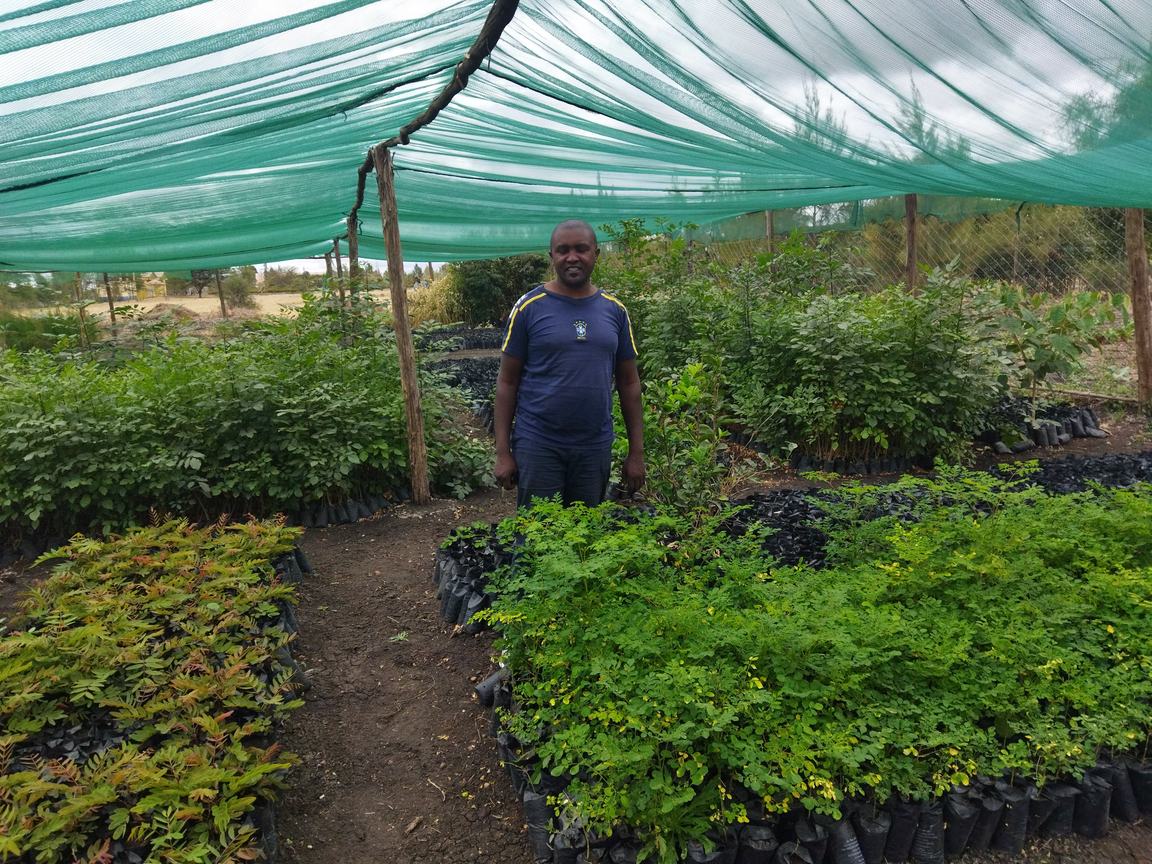
That is why the project has worked to demonstrate that trees can be productive community assets. Fruit trees provide food for households and surplus produce for sale. Community nurseries create opportunities to produce and sell seedlings. Together, these activities help families develop additional sources of income while contributing to environmental restoration.
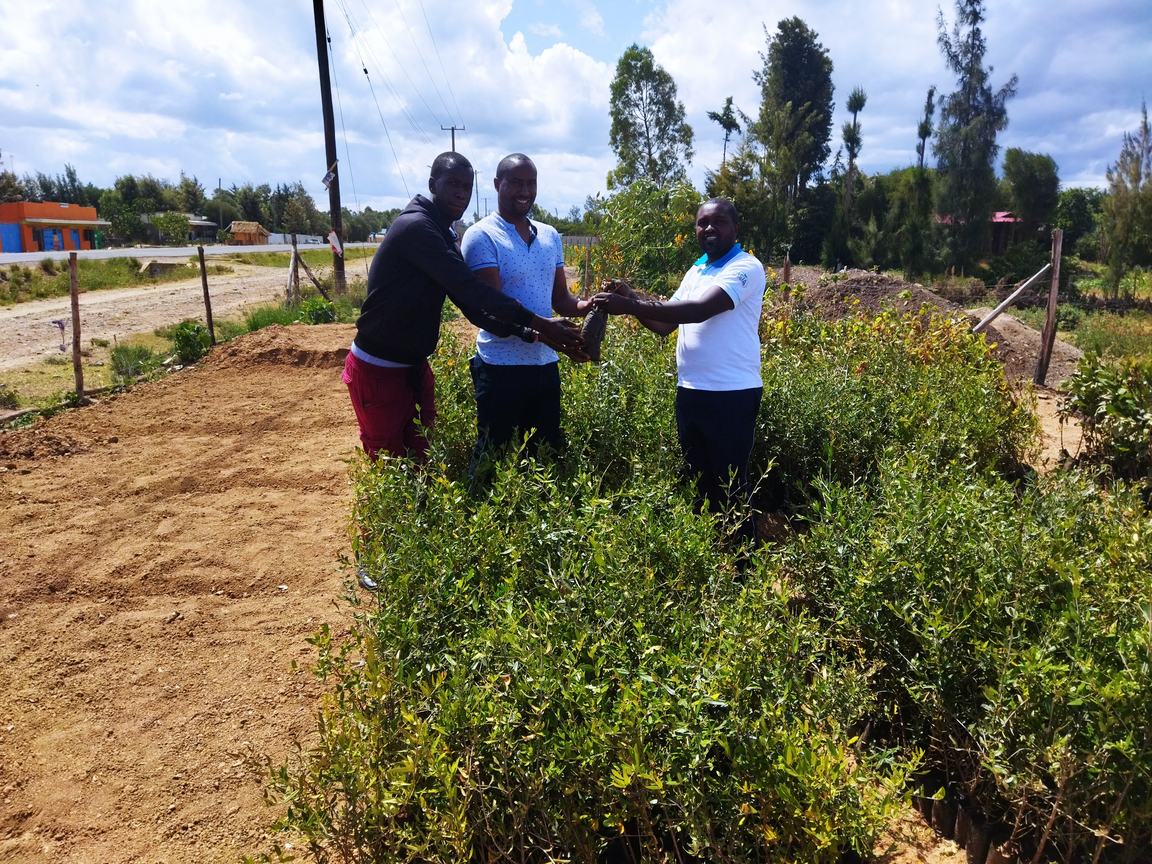 Seedlings leaving the nursery. Each one is both a restoration
input and a potential household asset.
Seedlings leaving the nursery. Each one is both a restoration
input and a potential household asset.
This is where environmental work becomes an economic story. A tree can become food, then nutrition, then household savings, then surplus, then income, then resilience. A nursery can become seedlings, then restoration, then fruit production, then enterprise, then household income.
The initiative was also designed as an alternative to environmentally destructive coping strategies such as charcoal production. The project has helped communities begin to see trees not as obstacles to development, but as natural capital and an investment in the future.
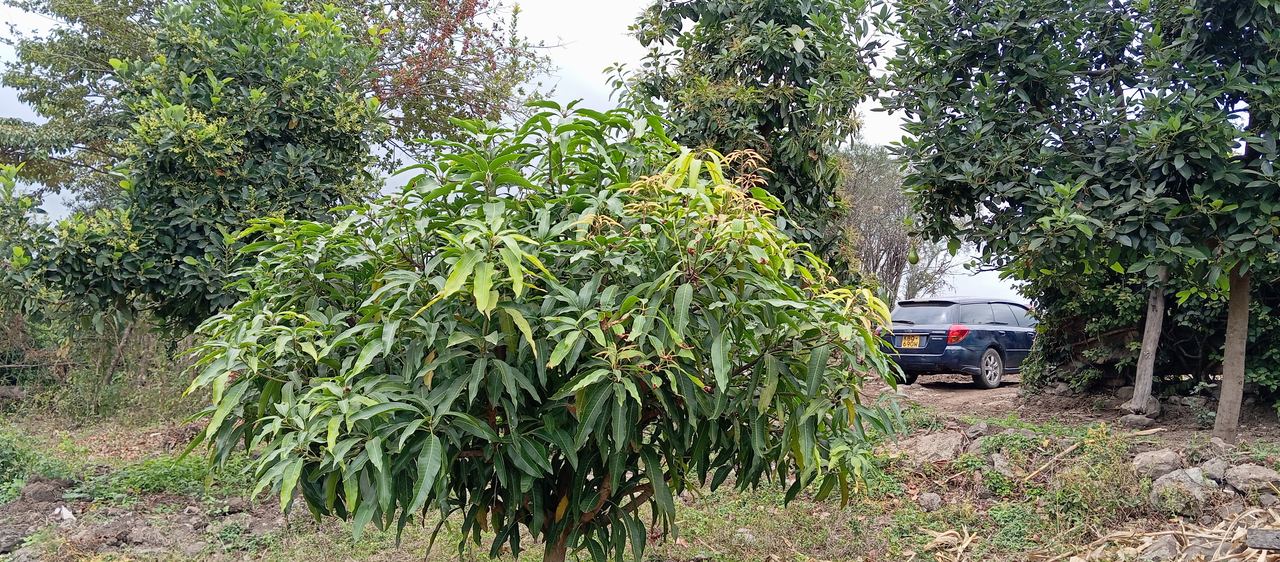 A fruit tree in bearing. This is the point at which restoration
starts paying a household back.
A fruit tree in bearing. This is the point at which restoration
starts paying a household back.
Greening schools, strengthening families
The power of this initiative lies in the connections it creates. Environmental restoration improves school landscapes and supports biodiversity. Education gives children practical knowledge and responsibility. Livelihoods create opportunities for families and community groups to benefit economically from fruit trees and nurseries.
Together, these create something greater than a tree-planting project. They create a community resilience model.
From Laikipia to Nyeri to Kiambu
The experience of the past four years has demonstrated that this approach can travel across communities and different ecological settings.
Laikipia East, Laikipia County. More than five
schools have been transformed through school afforestation,
contributing to greener learning environments, shade and
opportunities for environmental education and future fruit
production.
Kieni, Nyeri County. Two schools have benefited
from the programme, demonstrating that school-based afforestation
can succeed in areas facing significant environmental and climate
pressure.
Juja, Kiambu County. The programme has extended
its approach into Juja Constituency, demonstrating that the model
can be adapted and scaled beyond its original areas of
implementation.
The lesson is clear. When schools become centres of environmental restoration, the impact does not stop at the school gate. It travels home, into families and throughout communities.
Climate action that people can feel
Climate change can sometimes feel like a distant global conversation. But for a child sitting beneath a tree on a hot afternoon, climate resilience becomes something tangible. For a family harvesting fruit from a tree they planted, it becomes food security. For a community nursery producing seedlings, it becomes an economic opportunity.
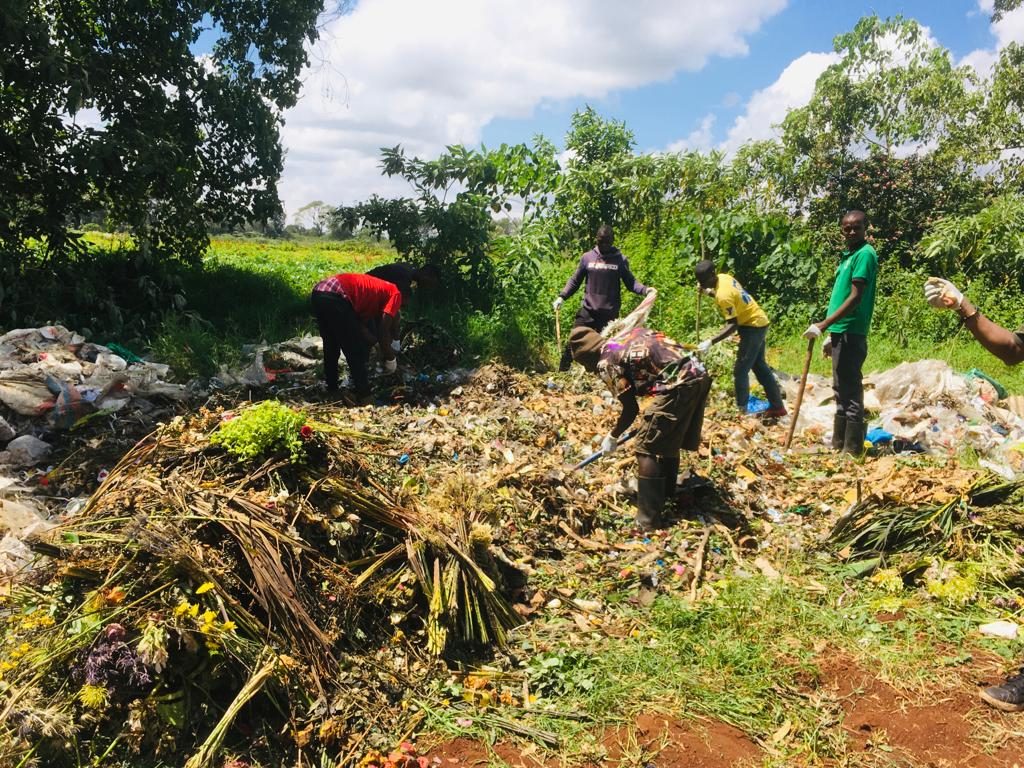 Community members reclaiming a degraded site. Restoration work
begins long before the first seedling arrives.
Community members reclaiming a degraded site. Restoration work
begins long before the first seedling arrives.
This is the kind of climate action Mt. Kenya Network Forum believes in: local, practical, community-owned and long-term. The project has demonstrated that environmental restoration can contribute to climate resilience, food security, education, livelihoods and poverty reduction at the same time.
A living legacy for the next generation
The greatest impact of this work cannot yet be measured in financial figures. It is growing, literally. The trees planted today will continue to provide benefits long after the project cycle ends.
A tree planted by a child can become tomorrow's shade for another generation, fruit for a family, income for a household, habitat for biodiversity, protection against soil erosion, a source of fodder, a carbon sink, and a living reminder that communities can take action.
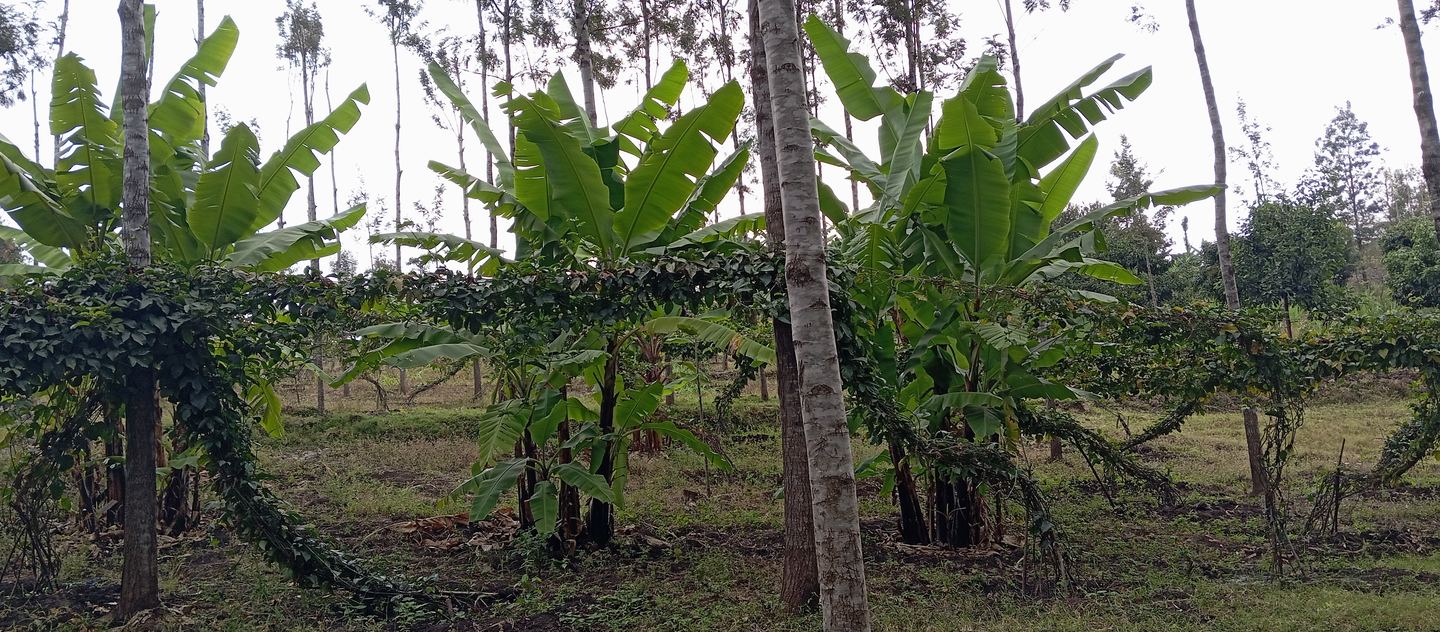 Years on: banana, vines and timber trees sharing the same
ground. Restoration and production growing together.
Years on: banana, vines and timber trees sharing the same
ground. Restoration and production growing together.
We did not only plant trees. We planted responsibility. We planted knowledge. We planted opportunity. We planted hope.
What four years have shown us
Environmental action can reduce poverty, because when communities
are supported to develop productive tree-based assets,
conservation becomes an economic opportunity rather than an
additional burden.
Schools are powerful centres for climate action, because children
become effective environmental ambassadors when given practical
opportunities to plant and care for trees.
Fruit trees provide a bridge between climate and livelihoods,
contributing to food, nutrition, restoration and household income
at once.
Community ownership creates sustainability, because the strongest
results emerge when communities, schools and local institutions
participate directly in implementation and stewardship.
Small interventions can create long-term change, because thousands
of trees cared for by communities can transform landscapes and
livelihoods.
This success belongs to many
No community transformation happens alone. Mt. Kenya Network Forum is deeply grateful to every partner and supporter who has walked with us throughout this journey. Our special appreciation goes to:
Global Greengrants Fund (GGF) — for supporting
community-led environmental action and enabling communities to
participate meaningfully in climate solutions.
The Movements Trust — for its solidarity,
accompaniment and commitment to grassroots movements working for
social and environmental justice.
African Activists for Climate Justice (AACJ) —
for strengthening climate justice action and amplifying community
voices.
The Kitchen: Juice and Source Organisation – Gabi Jubran
— for the support, solidarity and commitment to community-centred
environmental and livelihood solutions.
350.org Africa — for strengthening climate
action, movement building and community participation.
Pan African Climate Justice Alliance (PACJA) / Kenya Platform
for Climate Change (KPCG)
— for strengthening climate justice networks, advocacy and
community engagement.
Center for Climate Action (CCA) — for supporting
climate action, environmental awareness and community
resilience.
Equity Group Holdings / Nanyuki Equity Bank — for
supporting community development and opportunities for local
economic resilience.
WRLD Foundation — for its commitment to
community-led development and environmental sustainability.
And to the many individual well-wishers, volunteers, school leaders, teachers, parents, pupils, students, youth groups, women's groups, community leaders and community members who have watered seedlings, protected trees, mobilised children, shared knowledge and kept this vision alive.
To the schools and communities: this is your success
We want to say something especially important to the schools and communities that welcomed this project. These trees belong to you. You are not simply beneficiaries. You are the owners, custodians and champions of this transformation.
A tree survives because someone waters it. A nursery succeeds because someone cares for it. A school becomes greener because teachers and pupils protect its trees. A community enterprise succeeds because families believe in its potential. Your commitment has turned an idea into something living.
The journey continues
Four years is a milestone, but it is not the destination. Mt. Kenya Network Forum remains committed to expanding school afforestation, strengthening community fruit tree nurseries, restoring indigenous trees, supporting youth and women's livelihood opportunities, and connecting environmental restoration with climate-resilient livelihoods.
Our ambition is not simply to plant more trees. It is to build more resilient schools, stronger families, greener communities and sustainable local economies. And we know that this work will require continued partnership.
Today, across Laikipia East, Kieni and Juja, that growth is becoming visible. The trees are growing. The schools are becoming greener. Children are learning. Communities are building resilience. Families are discovering new possibilities. And the vision continues.
We have not simply planted trees. We have helped communities plant hope. As the trees continue to grow, so will the benefits for generations of children, families and communities. This is our living legacy. This is community climate action. This is the power of partnership.
Stephen Kariuki Kiboi
Executive Director, Mt. Kenya Network Forum
Growing trees. Growing communities. Growing hope.